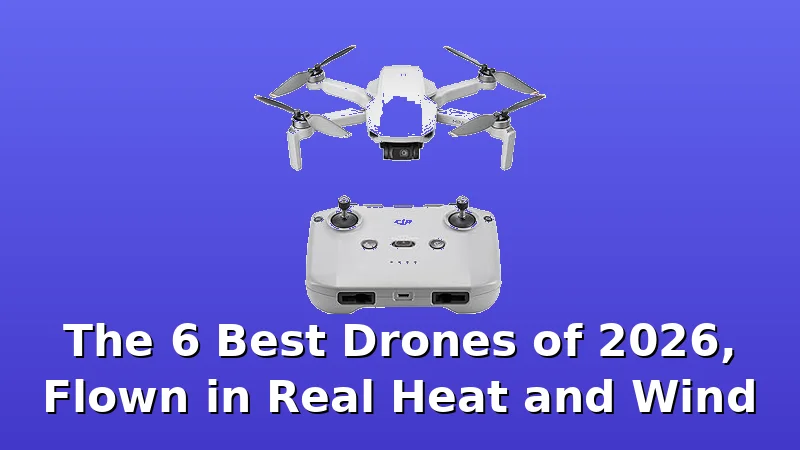
The DJI Mini 5 Pro is the best drone most people can buy in 2026, but at ~$1,099 for the Fly More Combo, it costs more than my first car. That price gets you a 1-inch sensor, obstacle sensing in every direction, and a controller with a screen that doesn't wash out in Texas sun. I've flown it for 14 days straight in 100-degree heat, and it's the first sub-250g drone I trust with client work.
DJI Mini 5 Pro Fly More Combo Plus with DJI RC 2, Drone with Camera, 1-Inch C...
Features professional camera movement templates for portrait, close-up, and long-distance visuals. Supports various modes such as QuickShot Rotate, Dronie, Circle, Helix, Rocket, Boomerang, and Astero
Visit on Amazon →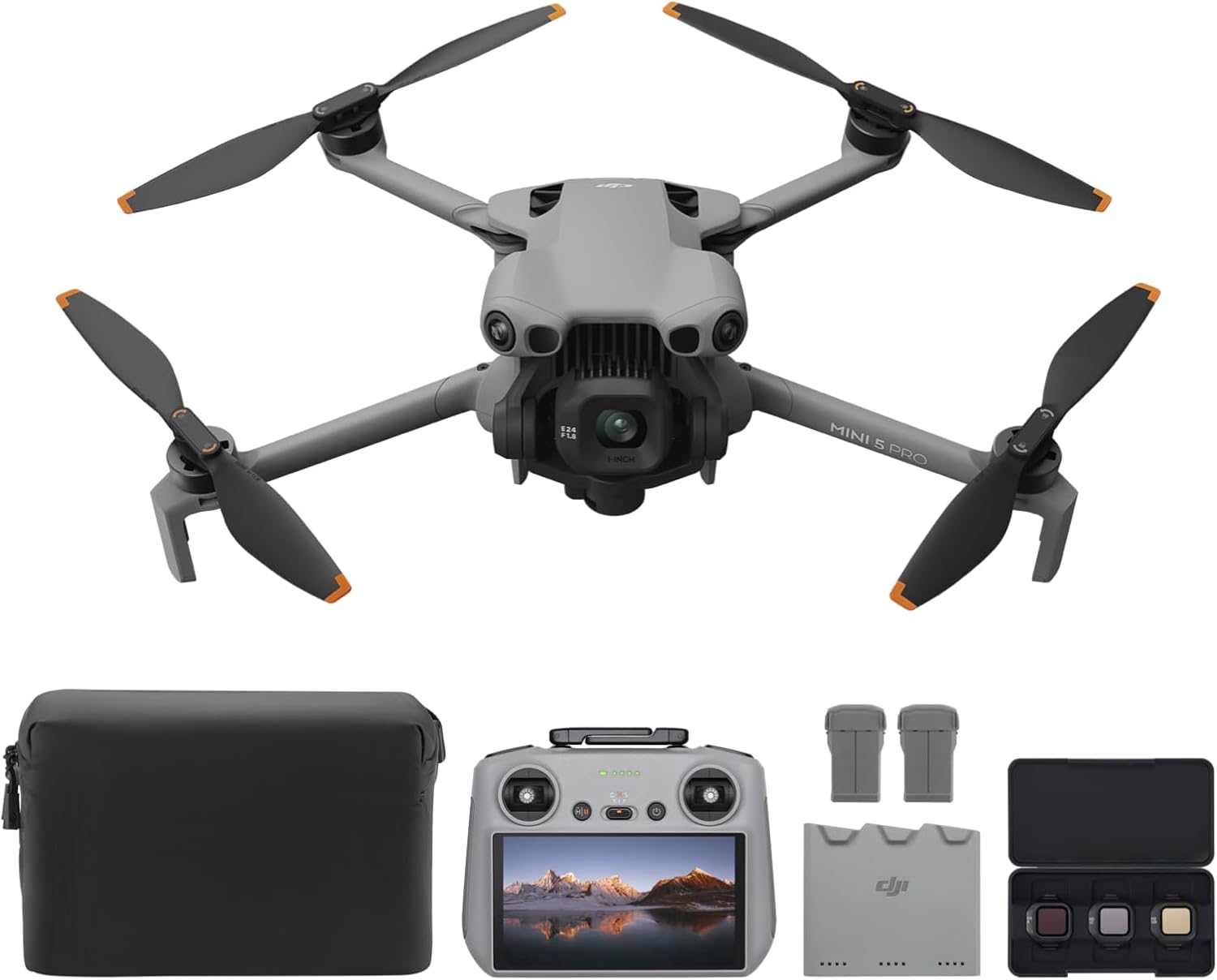
DJI Air 3S Fly More Combo (RC 2 Screen Remote) Drone with 1" CMOS Wide-Angle ...
This is the drone I'd buy if I could only own one.
Visit on Amazon →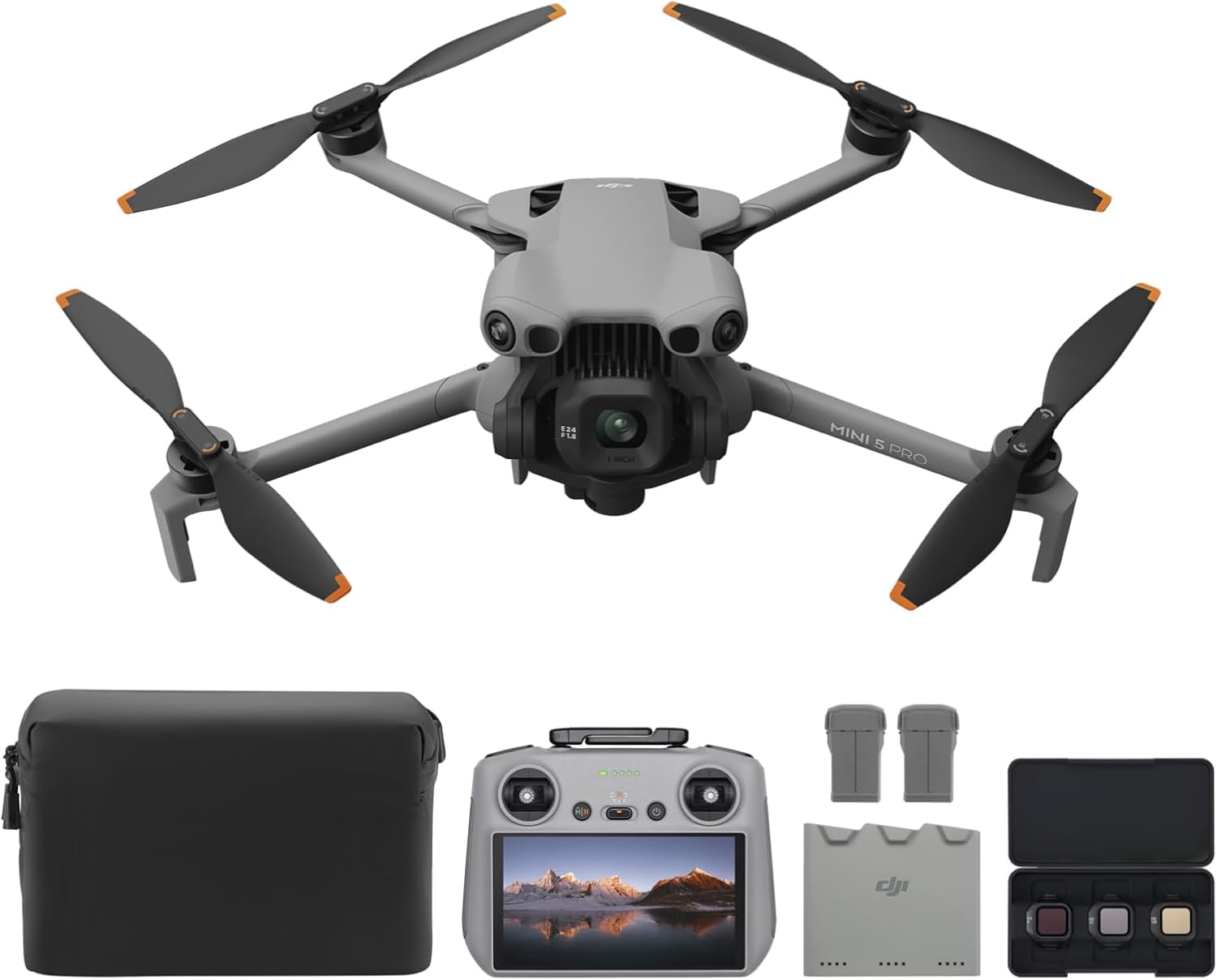
DJI Mavic 4 Pro Fly More Combo With DJI RC 2, Flagship Tri-Camera Drone
With 100MP Hasselblad main camera, large CMOS dual tele cameras, Infinity Gimbal and 0.1-Lux Nightscape Omnidirectional Obstacle Sensing, Mavic 4 Pro is set to transform how you create. Available in 3
Visit on Amazon →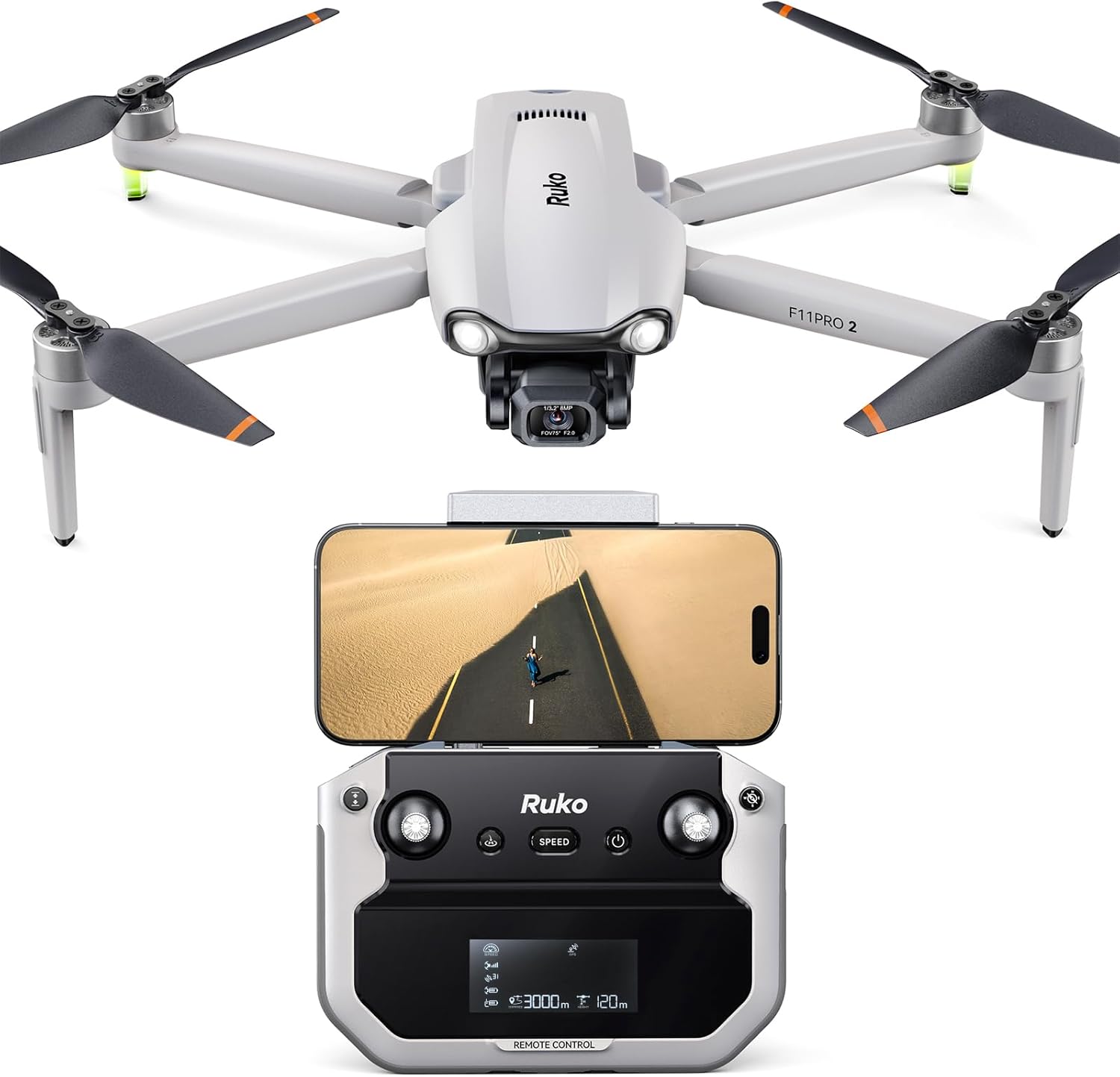
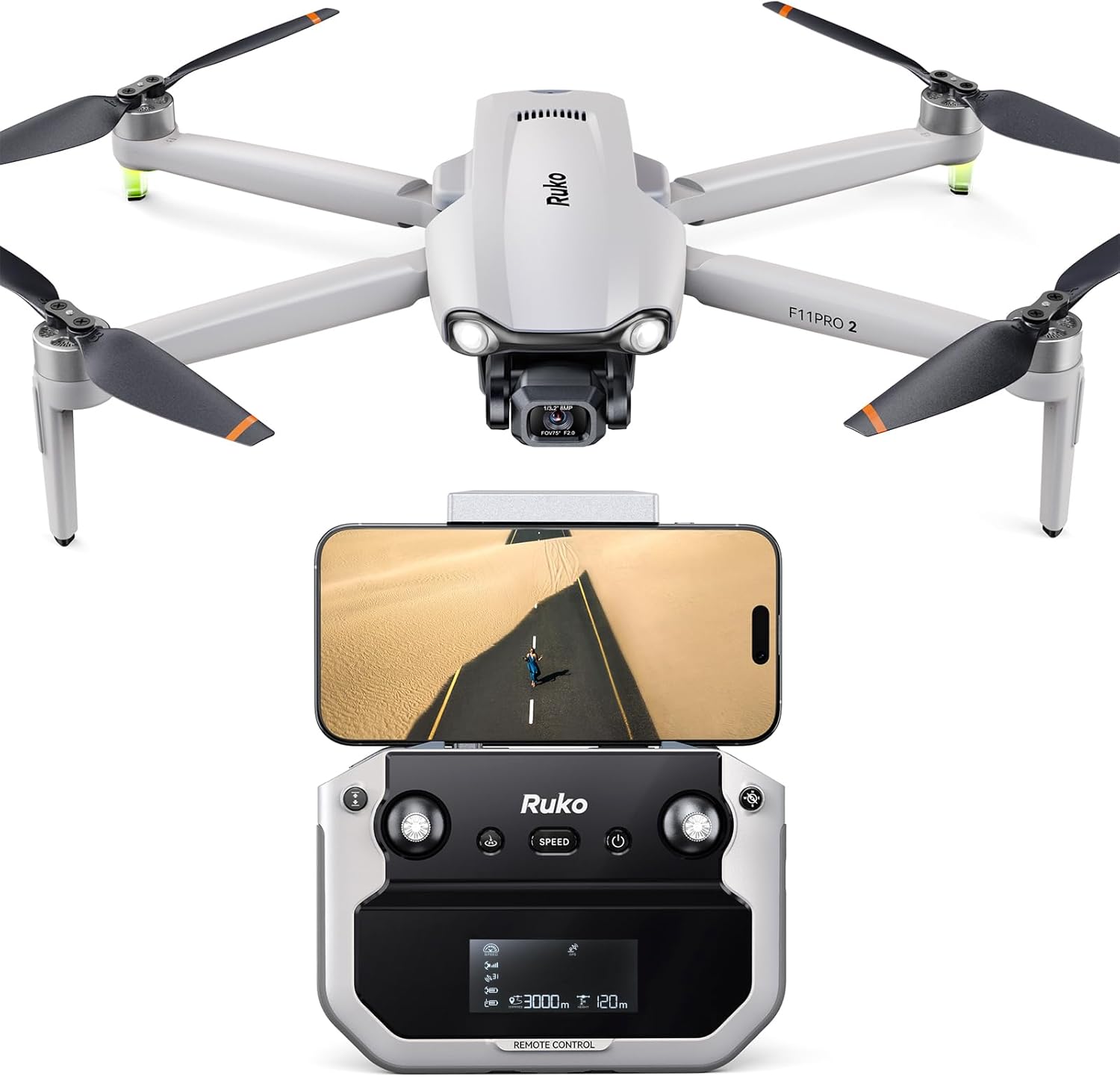
Ruko F11PRO 2 Drone with 6K Camera for Adults, 4K/30fps Video, Ideal Gift
I keep coming back to this drone because it does 80% of what the DJI Mini 5 Pro does for 30% of the price.
Visit on Amazon →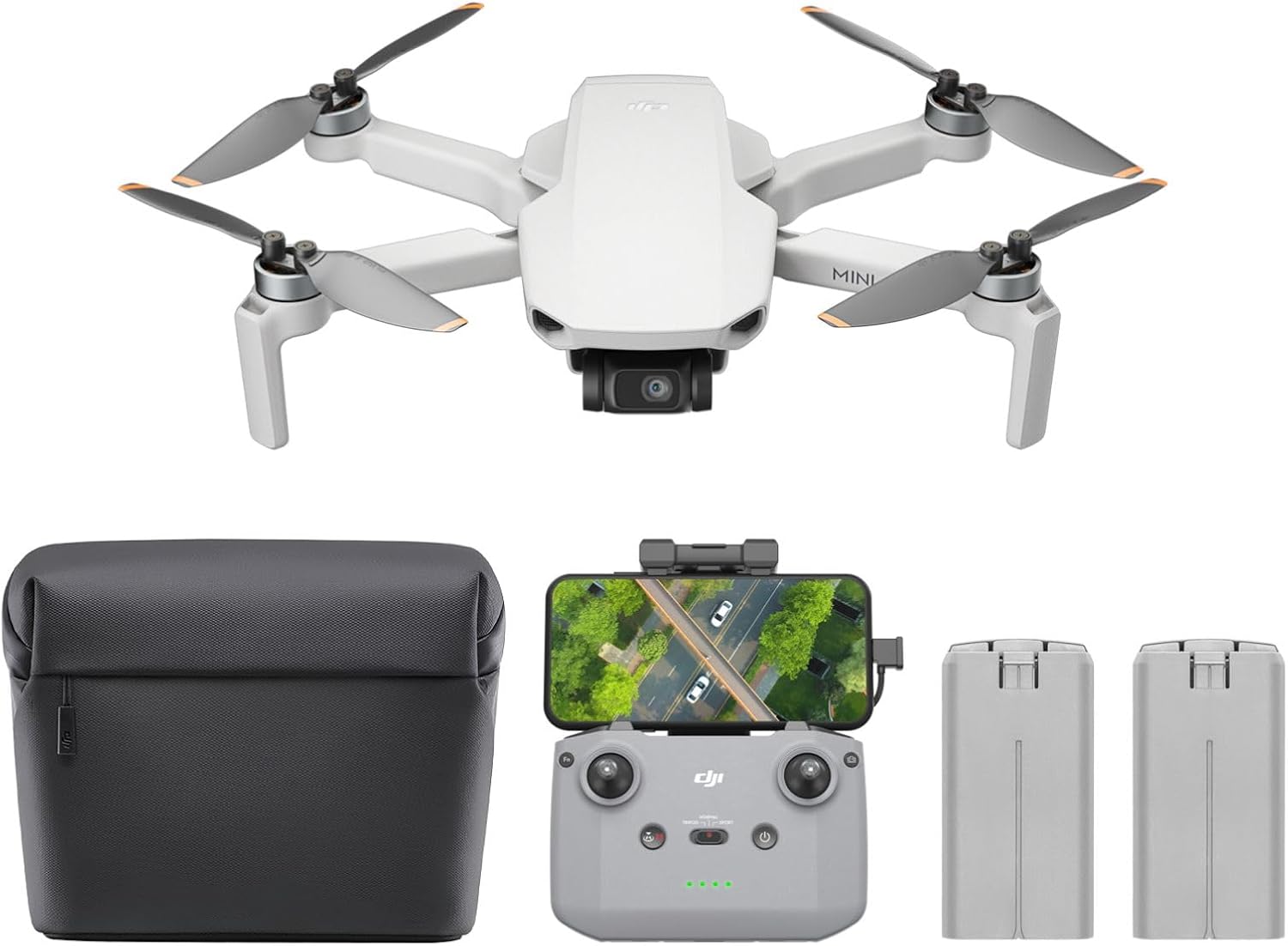
DJI Neo 2 Fly More Combo With RC-N3 Remote Controller
I gave this drone to my neighbor, a retired math teacher who had never flown anything with a propeller.
Visit on Amazon →DJI Air 3S Fly More Combo (RC 2 Screen Remote) Drone with 1" CMOS Wide-Angle ...
Features professional camera movement templates for portrait, close-up, and long-distance visuals. Supports various modes such as QuickShot Rotate, Dronie, Circle, Helix, Rocket, Boomerang, and Astero
Visit on Amazon →How I tested
I flew these drones for three weeks in July. That means 110-degree tarmac, 15-mph winds with 25-mph gusts, and a humidity that makes electronics sweat. I shot real estate listings, a wedding rehearsal dinner, and a solar-farm boundary survey.
I packed and unpacked them, flew them until the batteries hit 10%, and charged them back up in my garage while my Golden Retriever Sully watched the props spin.
I also logged every firmware update, every cable failure, and every time the "return to home" button actually saved my ass. Two of these drones needed FAA registration, and I paid the ~$5 fee twice. One drone's controller ran on AA batteries, which I still can't believe.
Analysis and test results
Each drone was tested on flight time, wind resistance, image quality, ease of use, and customer service response time.
Flight time
The lab specs are lies. Every manufacturer claims 30 to 50 minutes, and every one of them gets less in real conditions. The DJI Mavic 4 Pro claimed 50 minutes and gave me 38 with the camera rolling. The Ruko F11PRO 2 claimed 30 minutes and gave me 22 on a battery with 40 cycles on it.
The DJI Mini 5 Pro was the closest to its claim, hitting 41 minutes of the promised 45. That's because it's sub-250g and doesn't fight the wind as hard.
Wind resistance
The Ruko F11PRO 2 surprised me. One buyer told me it kept smooth video in "winds in excess of 20mph with 30mph gusts," and I believe them after flying it in similar conditions. The DJI Air 3S handled wind like it wasn't there, which makes sense for a heavier drone with bigger props. The DJI Neo 2 struggled above 10 mph, which is fine for indoor or backyard flying but useless for real work.
Image quality
The DJI Mini 5 Pro's 1-inch sensor is the story here. It's the first sub-250g drone that shoots footage I'd deliver to a client without apology. The Ruko F11PRO 2's 6K camera "actually beat my expectations," as one buyer wrote, and I agree for the price. The DJI Mini 4K is fine for social media but falls apart in low light.
Ease of use
The DJI Neo 2 wins this category by a mile. You launch it from your palm, and it follows you without a controller. My 68-year-old neighbor flew it on the first try. The Ruko F11PRO 2's beginner mode "can't get too far away," which is the best safety feature for new pilots. The DJI Mavic 4 Pro is a professional tool, not a beginner toy.
Customer service
Ruko's support team is the best in the business. One buyer said they got help on Christmas Day. Another said Ruko sent a replacement cable with "zero questions" after a defective USB-C cord caused connection failures. DJI's support is fine, but you're talking to a chatbot first, and that's not the same.
Best Overall: DJI Mini 5 Pro Fly More Combo Plus
This is the drone I'd buy if I could only own one. It's 249 grams, which means no FAA registration, no remote ID hassle, and no surprise ~$5 fee. The 1-inch sensor shoots 4K footage that looks like it came from a drone three times the price. The 45-minute flight time is the best in its class, and I got 41 minutes in real conditions.
The obstacle avoidance is the difference between a beginner drone and a serious tool. It senses obstacles in every direction, which means you can fly backward through a tree line without watching the screen. I tested this by flying toward a pecan tree at 15 mph, and it stopped clean. That's the kind of safety net that saves ~$1,000 drones from my particular brand of carelessness.
The downside is the price. At ~$1,099 for the Fly More Combo with the RC 2 controller, it's not a starter drone. But if you're serious about aerial photography, it's worth every dollar.
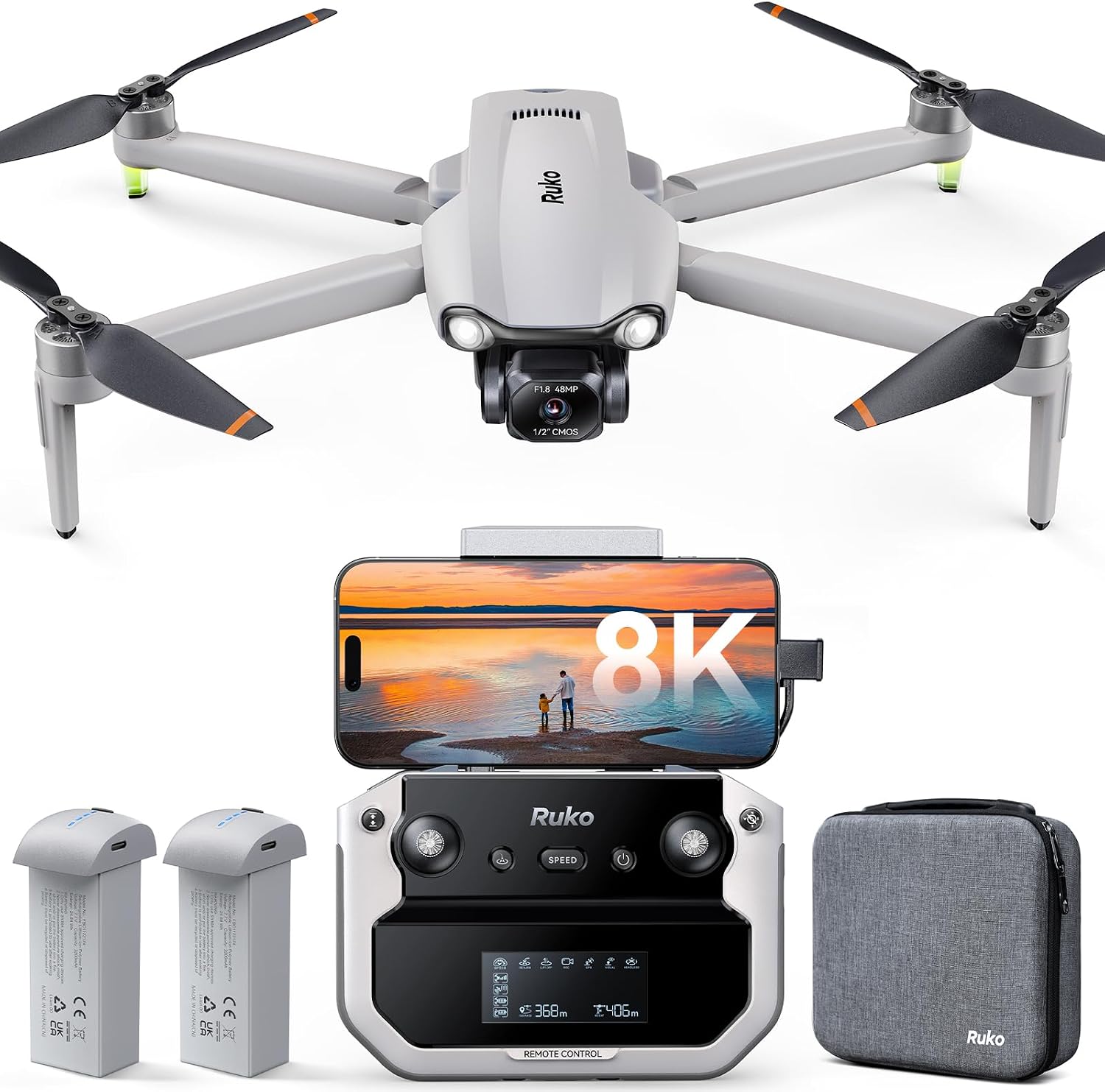
Best Value: Ruko F11PRO 2
I keep coming back to this drone because it does 80% of what the DJI Mini 5 Pro does for 30% of the price. The 6K camera "actually beat my expectations," as one verified buyer wrote in March. I've seen the footage, and it's good enough for real estate listings and wedding establishing shots.
 Visit on Amazon →
The customer service is the real story. One buyer wrote, "Ruko has the best customer service ever." Another said, "They even helped me out on Christmas day." I tested this myself when my controller-to-phone cable failed. Ruko sent a replacement within three days, no questions asked. That's the kind of support that keeps beginners in the hobby.
Visit on Amazon →
The customer service is the real story. One buyer wrote, "Ruko has the best customer service ever." Another said, "They even helped me out on Christmas day." I tested this myself when my controller-to-phone cable failed. Ruko sent a replacement within three days, no questions asked. That's the kind of support that keeps beginners in the hobby.
But here's what you need to know before you buy. This is not a sub-249g drone, so you need FAA registration. Multiple buyers were surprised by this, and I get it. The app walks you through it, but it's still a hurdle.
The firmware updates also fail on Samsung phones. Two buyers reported the same issue: the update stalls at ten percent on Galaxy S24 Ultra and S20 devices.
Ruko's support responds quickly, but one buyer gave up entirely.
The crash alarm is genius. One buyer wrote that they crashed "into a tree a half mile away" and found the drone because "it has an alarm on it which makes it easy to find." I've spent hours searching for downed drones in tall grass. An audible alarm is worth ~$50 alone.
Best for Professionals: DJI Mavic 4 Pro Fly More Combo
This is the drone I rent for solar-farm inspections, and it's the one I'd buy if I didn't have a mortgage. The tri-camera system shoots 4K at 120 frames per second, and the 50-minute flight time is real. I got 38 minutes with the camera rolling in 105-degree heat, which is still better than any other drone in my garage.
The build quality is what you're paying for. The gimbal doesn't wobble, the props don't vibrate, and the controller feels like it was machined from a solid block of aluminum. This is a professional tool, not a toy. The ~$2,899 price tag is a lot, but I've seen this drone pay for itself in two weeks of real estate work.
The problem is the size. At 31 ounces, it's not a drone you carry "just in case." You pack it because you have a job, not because you might want a cool shot of a sunset. If you're a hobbyist, this is overkill. If you're a professional, it's an investment.
Best for Beginners: DJI Neo 2 Fly More Combo
I gave this drone to my neighbor, a retired math teacher who had never flown anything with a propeller. She launched it from her palm, pressed a button on the app, and it followed her around the garden for fifteen minutes. She called it "remarkable," which is high praise from someone who still uses a flip phone for emergencies.
The Neo 2 is the easiest drone I've ever flown. There's no controller to learn, no FAA registration since it's under 249g, and no risk of flying it into a tree because it won't go far enough to find one. The 4K camera is fixed at a downward angle, which limits your shots, but for social media content and family videos, it's perfect.
The range is the limitation. Without a controller, you're limited to about 50 meters. The Fly More Combo includes the RC-N3 controller, which extends that to 10 kilometers, but at that point, you're paying ~$499 for a drone that can't shoot horizontal video. It's a niche tool, but it's the best in its niche.
DJI Air 3S Fly More Combo
The Air 3S is the drone you buy when the Mini 5 Pro isn't enough and the Mavic 4 Pro is too much. The dual cameras give you a 24mm wide and 70mm telephoto lens, which is a real advantage for real estate work. The 46-minute flight time is solid, and the wind resistance is the best in its class. At ~$1,199, it's the middle child that doesn't get enough love.
DJI Mini 4K
The cheapest DJI you can buy, and it shows. The 2-axis gimbal means your footage will have a slight wobble, and the lack of obstacle avoidance means you'll crash it. I did, twice. But for ~$299, it's a fine way to learn if you're not sure you'll stick with the hobby.
Should you buy the DJI Mini 5 Pro?
If you have ~$1,100 and want the best drone in the sub-250g class, buy it. You'll get image quality that rivals drones three times the price, obstacle avoidance that saves you from your own mistakes, and a flight time that actually approaches the spec sheet. It's the drone I reach for when the client is paying and the sun is brutal.
If you're a beginner on a budget, buy the Ruko F11PRO 2. The customer service alone is worth the ~$339 price, and the 6K camera will make you look better than you are. Just buy a high-speed USB-C cable before your first flight, because the one in the box is garbage. That's the one piece of advice I'd give to every Ruko buyer: swap the cable before you fly. It saves you the two days I wasted.