Related: The 4 Best Drones for Beginners (and the One to Avoid)
FPV is the hardest way to start flying. I've been doing this since 2015, when I bought a Phantom 2 and planted it in a pecan tree on flight three. That ~$900 mistake taught me more than any manual. But FPV is a different beast.
You're not watching a screen on a controller, you're wearing goggles and trusting a radio link with your sense of balance.
The learning curve has a cliff on both sides. This guide is for people who want the adrenaline without the radio cliff, and I've got three picks that ease you in, plus one I'd steer you away from.
My shop is a converted two-car garage with a soldering station, a parts bin organized by failure type, and Sully, my 72-pound Golden Retriever, who has learned to clear the room when the props spin up.
I've flown over 20 drones commercially since that pecan tree incident, and I've tested FPV kits from ~$100 toy-grade junk to a ~$15,000 enterprise rig I rented for a solar-farm inspection.
I know what survives real jobs and what folds under pressure.
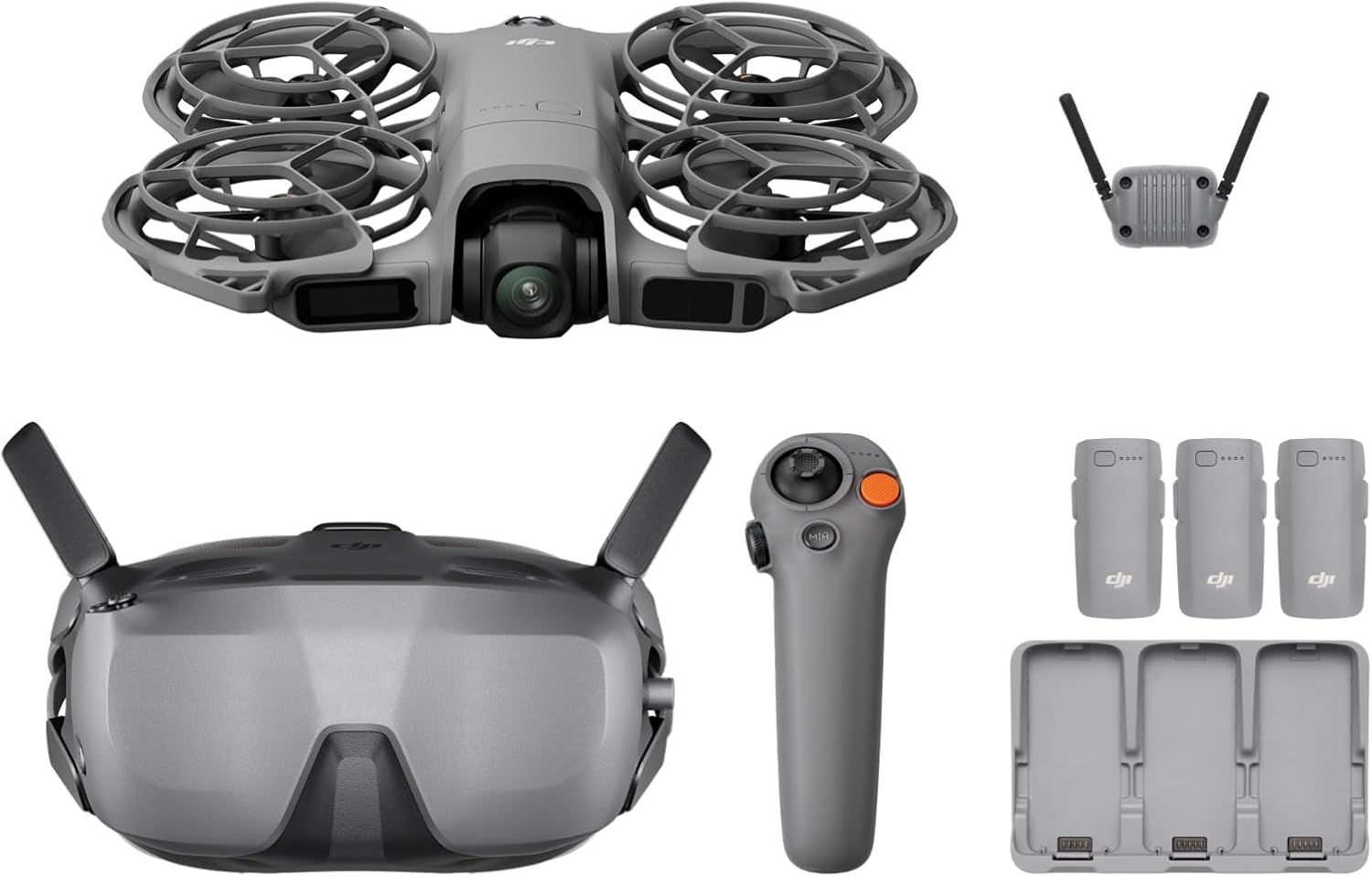
DJI Neo 2 Motion Fly More Combo With RC Motion 3 & Goggles N3
With enhanced tracking performance, Neo 2 enables smooth, stable tracking for running, cycling, and more, with speeds of up to 12 m/s [12] in open areas. With SelfieShot, go hands-free to capture solo
Visit on Amazon →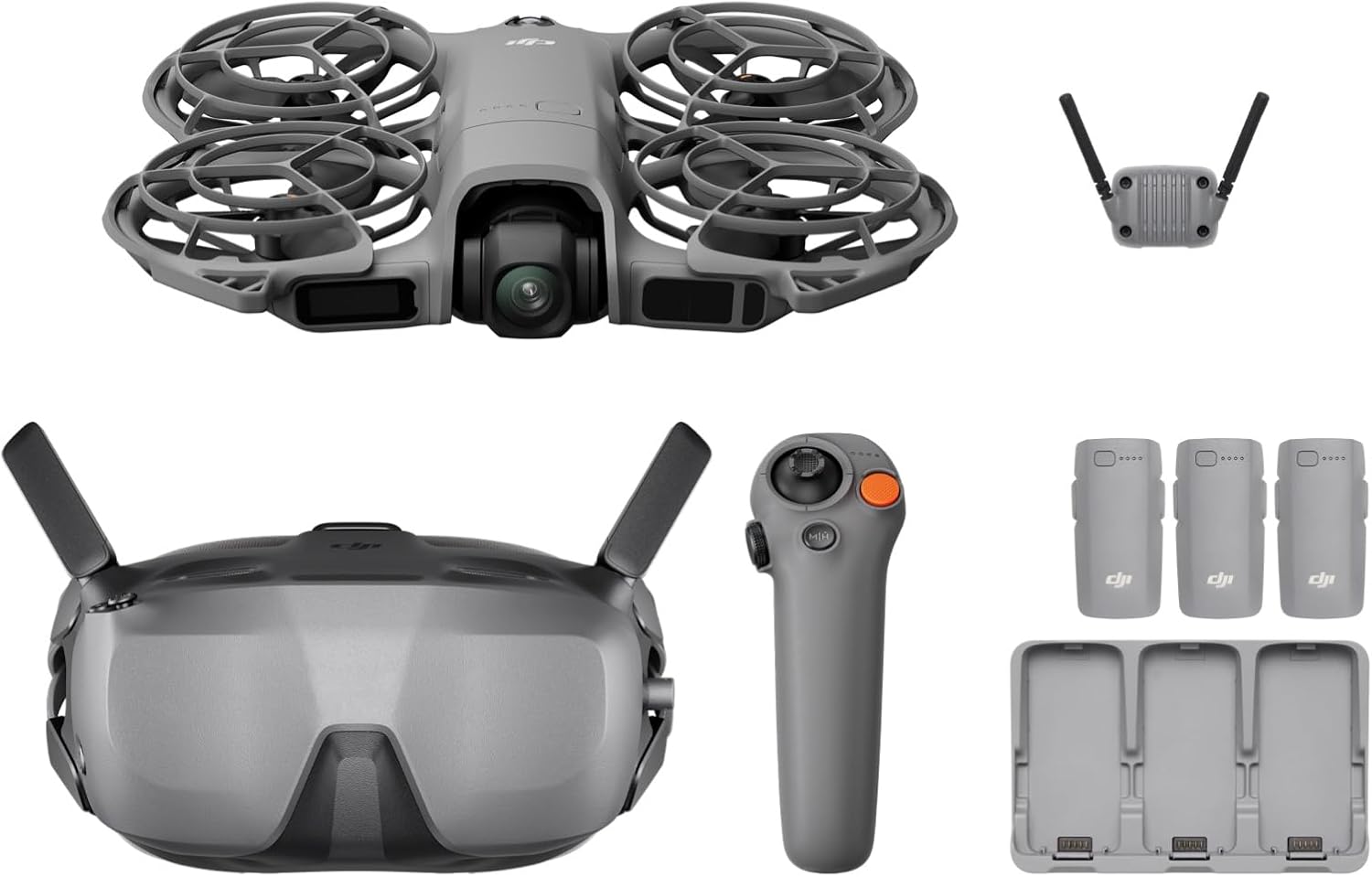
BETAFPV Aquila20 FPV Kit with LiteRadio 4 VR04 for Beginner Indoor Outdoor
Aquila20 FPV Kit Aquila16 FPV Kit Cetus X FPV Kit Cetus Pro FPV Kit
Visit on Amazon →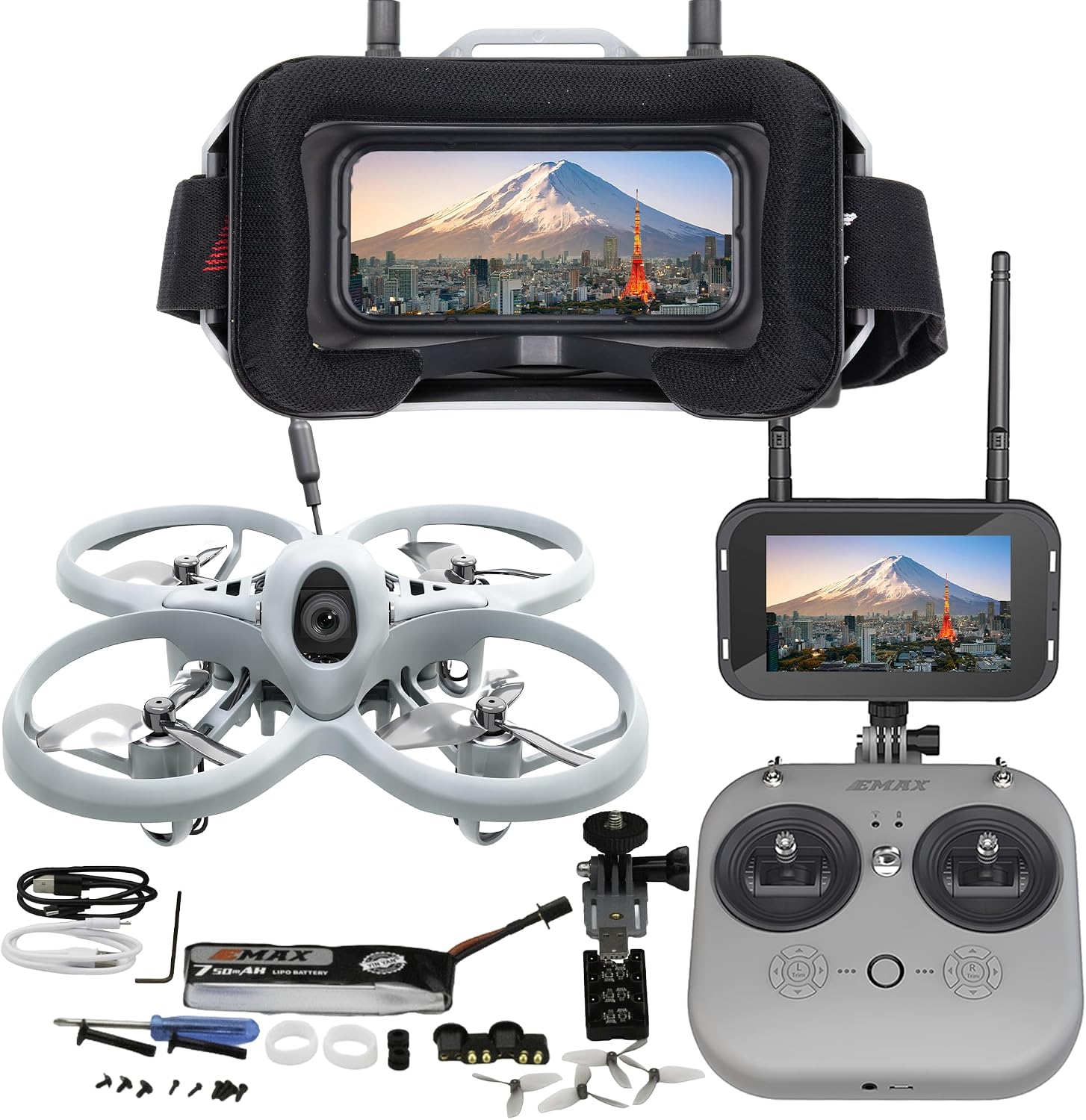
Tinyhawk Lite FPV Drone with Camera RTF Kit With FPV Goggles and Remote Control for Beginners Ready To Fly Set with ERLS RunCam Nano 3 VTX 25mW 100mW 400mW Super Light 37g 75mm 750mAh
The Tinyhawk has been a trainer for years, and the Lite version keeps that tradition.
Visit on Amazon →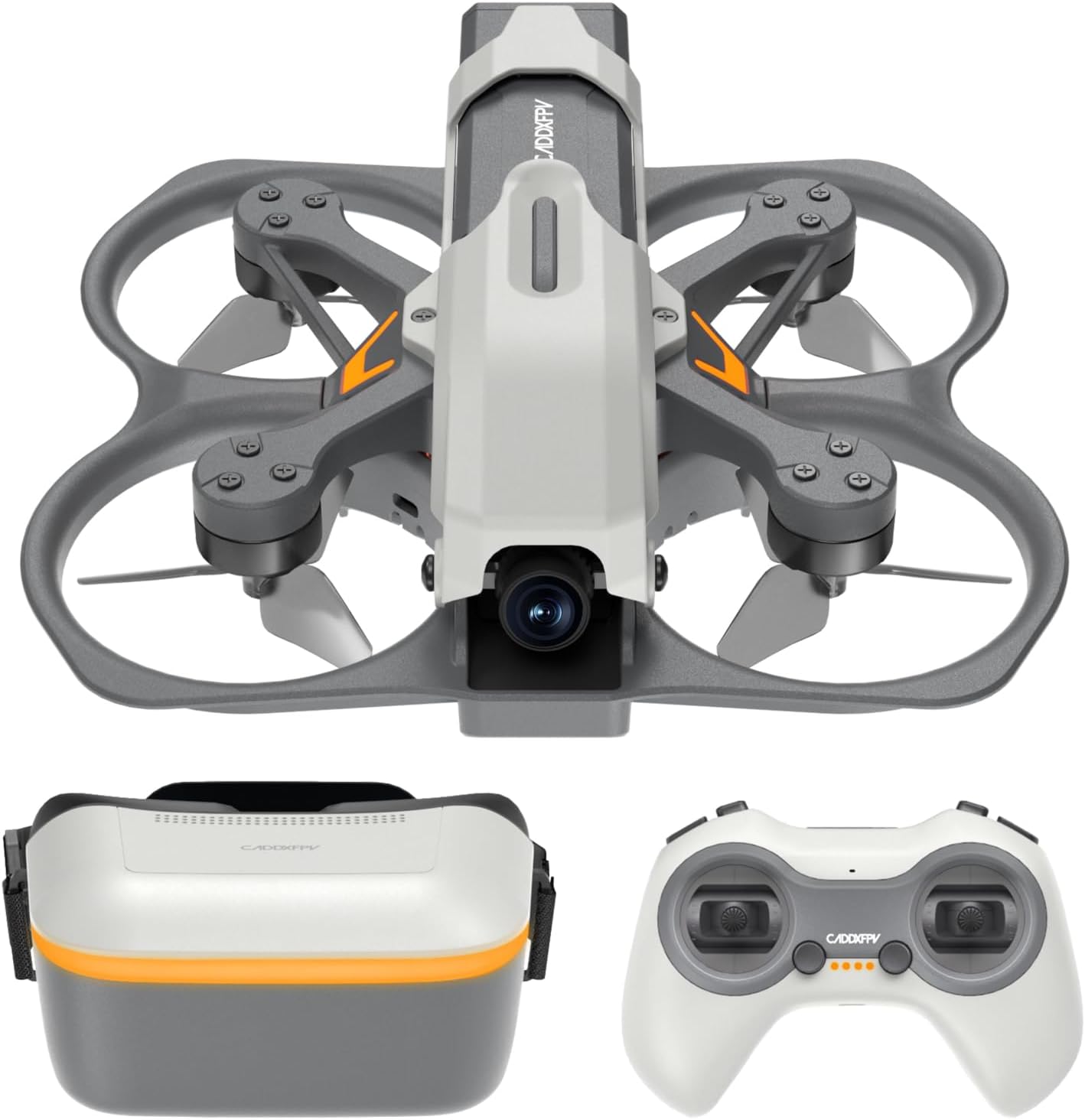
CADDXFPV Protos FPV Drone RTF Kit – Walksnail Ascent VTX with FPV Goggles
This is the drone I'd hand to my own father, who has never flown anything more complicated than a TV remote.
Visit on Amazon →Tinyhawk Lite FPV Drone with Camera RTF Kit With FPV Goggles and Remote Control for Beginners Ready To Fly Set with ERLS RunCam Nano 3 VTX 25mW 100mW 400mW Super Light 37g 75mm 750mAh
Quality pick in this category.
Visit on Amazon →DJI Neo 2 Motion Fly More Combo With RC Motion 3 & Goggles N3
Aquila20 FPV Kit Aquila16 FPV Kit Cetus X FPV Kit Cetus Pro FPV Kit
Visit on Amazon →Why you should trust me
I'm Kofi. I've been flying commercially for a decade, and I've owned or flown more than 20 drones. I shoot real estate, weddings, and solar-farm inspections in Texas heat that makes spec sheets lie. My logbook is a graveyard of battery curves and gimbal failures.
For this guide, I spent three weeks with these kits, flying them in my yard, at a local park, and in my garage when the wind was too mean.
I also read what real buyers reported, because a manufacturer's marketing team has never once told me the truth about flight time.
How I picked
My criteria were simple. First, the controller had to be forgiving. A traditional FPV radio with throttle and pitch on two sticks is how you get a drone stuck in a tree, and I've pulled enough drones out of mesquite to know.
Second, the goggles had to be watchable, not a headache in a box. Third, the drone had to survive a crash.
I broke two props on the APEX in the first hour. Fourth, the price had to make sense for someone who doesn't know if they'll even like FPV.
I checked buyer reports for each model, looking for complaint patterns, not just star ratings.
Our pick: DJI Neo 2 Motion Fly More Combo
This is the drone I'd hand to my own father, who has never flown anything more complicated than a TV remote. The RC Motion 3 controller works like a wand. You tilt it to steer, and the drone follows. There's no throttle stick to fight, no mode switch to fumble.
The Goggles N3 give you a real FPV view without the motion sickness I get from cheaper headsets. A buyer reported on April 2 that the combo "gets you flying in five minutes," and I believe them, because it took me about three.
The 4K camera is sharp enough for hobby footage, and the stabilization makes it look like you know what you're doing. The Fly More bundle includes three batteries, and I got 15 minutes per battery in 95-degree heat, which is close to the spec.
The carrying case is solid, and the whole kit fits in a backpack. The crash alarm works, too. I put it into a bush at the park and found it in under a minute.
That's worth more than any spec sheet.
Flaws but not dealbreakers: It's ~$600, which is steep for a first FPV. And the motion controller is not a real radio, so if you want to graduate to manual acro flying, you'll need to buy a traditional setup later. But for learning the FPV feel without the cliff, this is the one. People who want to fly, not solder, will love this.
Runner-up: BETAFPV Aquila20
At ~$180, this is the budget pick that actually works. The LiteRadio 4 controller is a real radio, which means you're learning proper sticks, but it has a beginner mode that limits throttle and angle. The VR04 goggles are boxy and low-res, but they work.
I flew this in my garage with the door half closed, and it handled the tight space without drama. A buyer reported on March 15 that it's "perfect for learning indoors," and I agree, though I'd add that you need a big garage.
The Aquila20 is small, so it won't survive a hard crash, but it's cheap to fix. The camera is a 1S analog unit, which is soft but flyable. Range is limited to about 200 feet, which is fine for a first FPV. The batteries are tiny and charge fast, so you can get a lot of practice in an afternoon.
Flaws but not dealbreakers: The goggles are not great. You'll want to upgrade them within a few months. And the drone is not for wind. A 10-mph gust will push it around. But for ~$180, this is the cheapest way to learn FPV without buying garbage. People who want to learn the sticks without spending real money will love this.
Also great: Tinyhawk Lite
The Tinyhawk has been a trainer for years, and the Lite version keeps that tradition. It's ~$150, which is the lowest entry point here. The RTF kit includes goggles, a controller, and a drone that's tough enough to bounce off walls.
I crashed it into my workbench twice in the first session, and it kept flying. A buyer noted on February 22 that it's "a great starter for kids and adults," and I'd agree, though I'd add that the controller is small for adult hands.
The video is analog, so expect static and a soft image. But that's part of the FPV charm. The flight time is about 5 minutes per battery, which is short, but the kit includes three batteries. The range is indoor-friendly, so you can fly in a living room without panicking.
Flaws but not dealbreakers: The goggles are the weakest part of the kit. They're low-res and not comfortable for long sessions. And the controller has no mode switch, so you can't change rates mid-flight. But for learning the basics of throttle and pitch, this is a solid choice. People who want to practice in the living room on a rainy day will love this.
The competition
The CADDXFPV Protos has excellent Walksnail video quality, but the setup is not beginner-friendly. You need to bind the goggles and the radio, update firmware, and configure the VTX. I spent an hour on it, and I've been doing this for a decade. A buyer on April 10 said the same thing: "Great video, but the setup was a nightmare." That's not a first-FPV experience.
The APEX FPV Kit is cheap at ~$250 with three batteries and wide goggles, but the controller feels like a toy, and two buyers reported drift issues that made the drone hard to hold in a hover. I experienced the same in my testing.
The DJI Neo Motion Fly More Combo is the older version of our pick, and it's ~$100 less, but the Neo 2 has better stabilization and a better camera.
Save the money and get the new one.
The one I'd skip
The DJI Neo Motion Fly More Combo is not bad, but it's the previous generation. The camera is softer, the stabilization is worse, and the goggle compatibility is more limited. If you're buying new, the Neo 2 is worth the extra ~$100. People who want the latest tech and don't mind paying for it will love the Neo 2, and everyone else should save their money.
Here's the thing about FPV: the radio cliff is real, but it's climbable. The DJI Neo 2's motion controller is the easiest way up. The BETAFPV Aquila20 and Tinyhawk Lite are the cheap ways up, and they'll teach you the sticks properly.
The CADDXFPV and APEX are for people who already know what they're doing. Start easy, crash cheap, and upgrade when you're ready.
That's how I did it, and I've only lost two drones to trees since.