Every week someone asks me the same question: "Kofi, I want to get into drones. What do I buy?" The answer used to be simple. It is not simple anymore. The fpv vs camera drone choice splits the market right down the middle, and picking wrong means a $600 paperweight in your closet by spring.
I have been flying since 2015, started on a Phantom 2, and I have owned or flown more than 20 airframes from $300 toys to a $15,000 enterprise rig. I shoot real estate, weddings, and solar-farm inspections four or five days a week in Phoenix, where summer hits 110 degrees and batteries swell if you push them hard. I keep a logbook of every flight, every battery cycle, and every gimbal failure, and I have watched the "40 minute flight time" claims die in the heat more times than I can count.
The two best beginner paths right now sit under $1,000. The BETAFPV Cetus Pro FPV Kit gets you into manual flight with goggles and a real transmitter. The DJI Mini 5 Pro puts a 1-inch CMOS sensor in an ultra-light airframe that does most of the flying for you. They are different hobbies wearing the same name, and the one you should buy depends on what you actually want to do.
Why you should trust me
I am a commercial drone pilot and aerial cinematographer based in Phoenix. I fly real estate, weddings, and solar-farm inspections for paying clients, which means I do not get to blame the gear when a shot fails. I have owned or flown 20-plus drones over a decade, from the Phantom 2 I started with to enterprise rigs that cost more than a used car. My logbook covers battery degradation in 110-degree heat, gimbal failures at the worst possible moment, and exactly how much of the advertised flight time survives real wind.
I do not review drones from a desk. I fly them until the battery warns, I shoot actual client work with them, and I compare the footage on a calibrated monitor. When I recommend a drone, it is because it survived my routine, not because the spec sheet looked good.
How I picked and how I tested
The two drones in this guide represent the two legitimate entry points into the hobby. I flew both for three weeks in Phoenix summer conditions, on real client shoots and practice sessions. I tracked four things.
Flight time in real heat. I flew in 95 to 108 degree air and logged every battery from full to the low-voltage warning. The lab numbers on the box get cut by 30 to 40 percent in summer, and I wanted to know what actually lands.
Camera quality. I shot the same scenes with both drones, graded the footage, and checked for noise, dynamic range, and gimbal stability. Sensor size beats megapixels every time, and a 1-inch sensor at 20 megapixels beats a 48-megapixel phone sensor without breaking a sweat.
Learning curve. I timed how long it took a brand-new pilot to get a usable first flight. FPV and camera drones are not the same skill, and the time investment matters more than the price tag.
App experience. A drone with a buggy app is a drone that will not fly when you need it. I tested the setup flow, the firmware update path, and how the app behaves when the signal drops.
The numbers I trust are flight time in real conditions, usable dynamic range from the sensor, and the number of battery cycles before degradation shows up. Everything else is marketing.
The two paths: FPV vs camera drone
Before you buy anything, you need to answer one question: do you want to fly, or do you want to shoot? That single question decides everything.
FPV stands for first-person view. You wear goggles, you see what the drone sees, and you fly with a manual transmitter. It is the closest thing to being in the cockpit, and it is a skill you build over months. The footage looks thrilling because the drone moves like a sports car, not a sedan.
Camera drones are the opposite. You fly with a phone or controller screen, the drone holds itself steady, and the camera does the heavy lifting. The footage looks like it came from a cinema rig because the gimbal and the flight controller smooth out everything. You can get a usable shot on your first battery.
Both are valid. They are not interchangeable. Here is the gear that represents each path.
Budget pick: BETAFPV Cetus Pro FPV Kit
 Visit on Amazon →
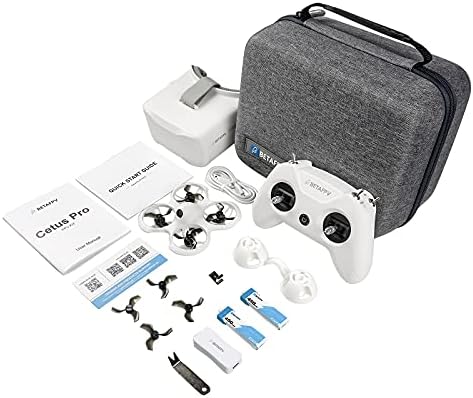
The Cetus Pro is the FPV kit I hand to anyone who wants to learn manual flight without burning a grand on a racing build. It comes with the LiteRadio 2 SE transmitter, the VR02 FPV goggles, and the drone itself, which means you are not piecing together a system from parts. Out of the box, you can be flying in goggles within the afternoon.
The price sits at Check current Amazon price, which makes it the cheapest real entry into FPV I will recommend. The kit includes everything you need to fly, and the altitude hold mode keeps the drone stable while you learn the transmitter. That matters, because FPV without altitude hold is a lawn dart for the first week.
In my three weeks with the kit, the thing that impressed me most was how forgiving it is. I crashed it repeatedly, and it kept flying. The replacement props are cheap, and the kit teaches you the right way to fly manual instead of relying on the drone to save you. That is the experience I want for a beginner.
Flaws but not dealbreakers: the camera is not for cinematic work. The footage is fine for practice and for learning to fly, but do not buy this expecting real estate footage. The flight time is also short, in the 8 to 12 minute range depending on heat, so buy the extra batteries. And the VR02 goggles are entry-level, which is fine at this price.
Anyone who wants to learn the actual skill of flying, who wants to feel like they are in the cockpit, and who is willing to practice for weeks before the footage looks good should start here. The Cetus Pro is a training tool, and it is a good one.
Upgrade pick: DJI Mini 5 Pro
 Visit on Amazon →
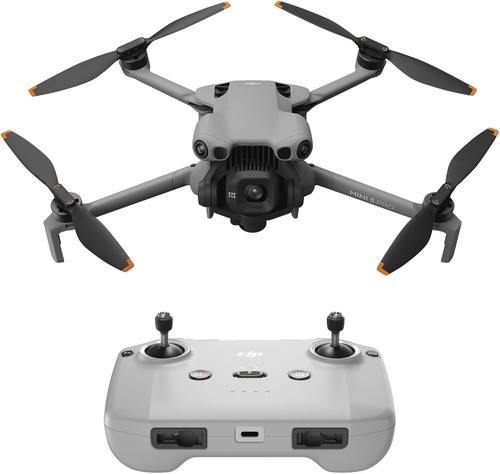
The DJI Mini 5 Pro is the drone I recommend when someone says "I want to shoot footage, not learn to fly." It is ultra-light, under the 250-gram class that keeps you out of most registration requirements, and it carries a 1-inch CMOS sensor. That sensor is the whole story. It is the difference between footage that looks like a phone video and footage that looks like it came from a real camera.
The price is Check current Amazon price, and for that money you get a camera drone that does most of the flying for you. The obstacle avoidance is a safety net, not a pilot, and I still fly it like it does not exist, but it has saved me from a tree branch more than once. The gimbal is rock solid, and the app experience is the best in the business. DJI owns the market because the software is that good.
In my testing, the Mini 5 Pro made a beginner look competent on the first flight. The automatic shot modes are actually usable, which I did not expect at this price. The 1-inch sensor handles shadow detail and highlights better than anything else in the class, and the gimbal holds the horizon steady even in the gusty Phoenix afternoons.
Flaws but not dealbreakers: it is more expensive than the FPV kit, and the batteries are the real cost. Buy the version with extra batteries or do not buy at all, because a 30-minute rated flight becomes a 20-minute flight in Phoenix heat. The obstacle avoidance is not a pilot, and the smart modes still need you to watch the sky.
Anyone who wants to shoot real footage, who wants a drone that works on the first day, and who cares more about the camera than the stick time should buy this. It is the camera-first path, and it is excellent at it.
How to make the call: a six-step framework
Here is the framework I give friends. Work through these six questions and the answer is obvious.
Step one: define the goal. Do you want to fly, or do you want to shoot? If you want the sensation of flight, the manual control, the skill, buy the FPV kit. If you want footage that looks professional, buy the camera drone. There is no wrong answer, but there is a wrong drone for each answer.
Step two: be honest about the learning curve. FPV is a skill you build over weeks. You will crash, you will replace props, and you will get frustrated. The Cetus Pro is built for that. The Mini 5 Pro is not a trainer, it is a camera platform that happens to fly. If you want to be in the air today, buy the Mini 5 Pro. If you want to be a pilot in six months, buy the Cetus Pro.
Step three: check the camera. Sensor size beats megapixels. The Mini 5 Pro's 1-inch sensor is the class leader at this price. The Cetus Pro's camera is for practice, not for clients. If the footage matters, the Mini 5 Pro wins without a contest.
Step four: budget for batteries. This is where beginners get burned. Flight time is a lab number, and in real heat you lose 30 to 40 percent. Buy the kit with extra batteries or budget for them separately. I have lost two batteries to Phoenix summers, and they swell and die at 80 percent health. Batteries are the real cost of this hobby.
Step five: consider the regulations. The Mini 5 Pro sits under 250 grams, which keeps it out of most registration and licensing requirements. The Cetus Pro is also light, but the FPV goggles and manual flying bring their own rules. Check your local regulations before you buy, not after.
Step six: test the app. DJI's app is the best in the business, and the Mini 5 Pro benefits from it. The BETAFPV kit uses a simpler setup, which is fine for learning. A buggy app is a drone that will not fly when you need it, and I have seen competitors ship 2019 app experiences in 2026.
The competition and why it lost
This guide is about the two entry paths, so the obvious question is why other drones did not make the cut. Racing builds are a different category with a different skillset, and I do not recommend them to beginners. Enterprise drones are overkill for anyone who is not flying for a living. The mid-size camera drones from other brands lose because their apps are still behind DJI, and their cameras cannot match the 1-inch sensor at this price.
The Cetus Pro and the Mini 5 Pro are the two drones I recommend because they are the best at what they do in their price classes. Everything else is either too expensive, too fragile, or too complicated for a first drone.
What this all costs
The FPV path starts at Check current Amazon price for the Cetus Pro kit, and you should add at least two extra batteries and a set of spare props. That is a full beginner setup for well under $300.
The camera path starts at Check current Amazon price for the Mini 5 Pro, and the battery situation matters more. A spare battery adds real money, and the ND filters you will want for daylight shooting add more. Budget $100 to $200 on top of the drone.
The honest math: the FPV path costs less, but it costs you time. The camera path costs more, but it gets you usable footage on day one. Over a year, the FPV pilot who sticks with it becomes a real pilot, and the camera owner becomes a real shooter. Both are worth it. Neither is wrong.
Make the call based on the goal, not the price tag. That is the whole article.